
定义:
接口是把公共实例(非静态)方法和属性组合起来,以封装特定功能的一个集合。接口是一种规范,也是一种能力
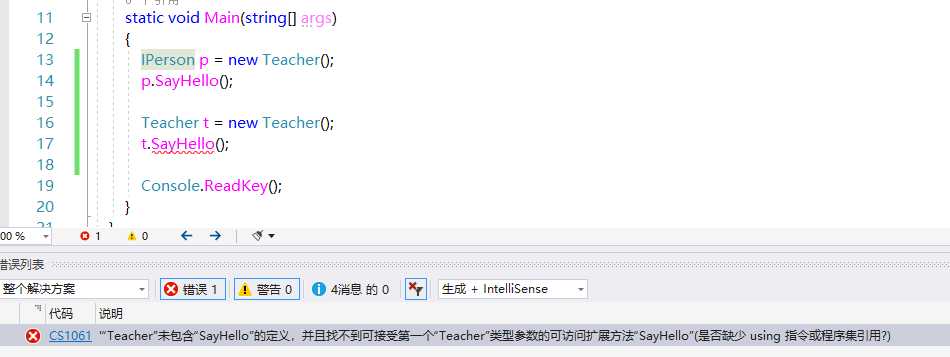
隐式实现接口
 1     class Program  2  {  3         static void Main(string[] args)  4  {  5             IPerson p = new Teacher();  6  p.SayHello();  7
 8             Teacher t = new Teacher();  9  t.SayHello(); 10
11  Console.ReadKey(); 12  } 13  } 14     class Teacher: IPerson 15  { 16         public void SayHello() 17  { 18             Console.WriteLine("Hello World!"); 19  } 20  } 21
22     interface IPerson 23  { 24         void SayHello(); 25     }
显示实现接口,目的:解决方法的重名问题
 1     class Program  2  {  3         static void Main(string[] args)  4  {  5             IPerson p = new Teacher();  6  p.SayHello();  7
 8  Console.ReadKey();  9  } 10  } 11     class Teacher: IPerson 12  { 13         void IPerson.SayHello() 14  { 15             Console.WriteLine("Hello World!"); 16  } 17  } 18
19     interface IPerson 20  { 21         void SayHello(); 22     }
隐式实现接口:可以用接口声明,也可以用实现类Teacher声明,调用者都可以得到实例化对象的行为SayHello;显示接口实现:SayHello方法只能通过接口来调用
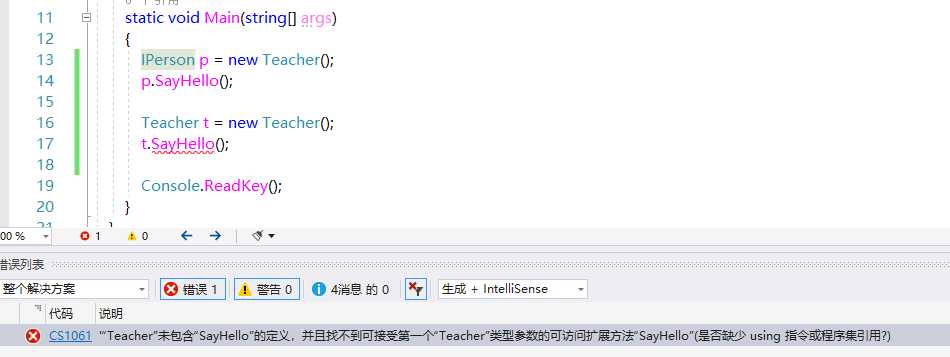
隐式实现接口时,Teacher有而且必须有自己的访问修饰符(public)
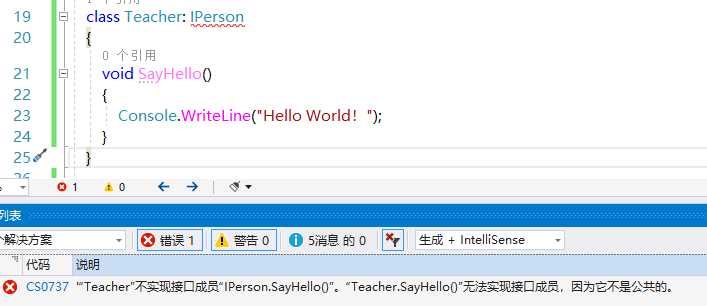
显式实现接口时,Teacher不能有任何访问修饰符
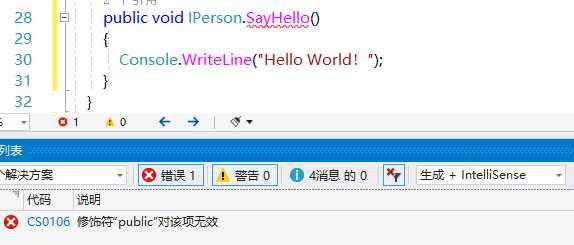
当一个抽象类实现接口时,需要子类去实现接口
 1     class Program  2  {  3         static void Main(string[] args)  4  {  5             IPerson p = new TeacherSon();  6  p.SayHello();  7
 8  Console.ReadKey();  9  } 10  } 11     abstract class Teacher : IPerson 12  { 13         public void SayHello() 14  { 15             Console.WriteLine("Hello World!"); 16  } 17  } 18
19     class TeacherSon : Teacher 20  { 21
22  } 23
24     interface IPerson 25  { 26         void SayHello(); 27     }
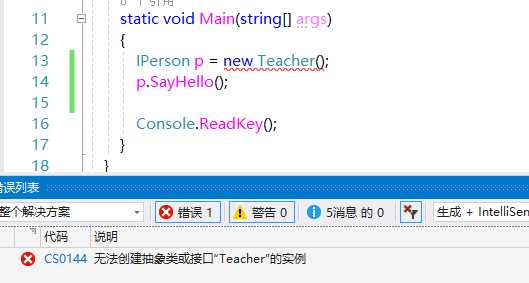
注意
- 接口名一般以大写字母I开头
- 不能像实例化一个类一样实例化接口(不能new)
- 接口不能包含实现其成员的任何代码(不能有方法体)
- 接口中可以有方法、属性、索引器、事件,不能有字段、构造函数和静态成员
- 实现接口的子类必须实现该接口的全部成员
- 接口只能继承于接口
- 接口中成员不能有修饰符,默认为public